
First of all, it must be said in fairness that the cypress was not born in Tuscany: its cradle is in the eastern Mediterranean basin, ideally between Persia (now Iran), Egypt, and Greece. It was imported to Italy by the Phoenicians and the Greeks, and to Tuscany by the Etruscans. It is important to note that, long before embellishing the avenues, gardens, parks, and farms of the Tuscan hills to the point of becoming one of the most important symbols of the Tuscan landscape in recent centuries, the cypress had a virtually uninterrupted ornamental and symbolic importance for thousands of years.
Human interest in this plant dates back a long way; slender, slender cypress trees were regularly planted in the gardens of legendary Persian and Egyptian palaces, and in Athens, their intrinsic formal elegance was also noted with pleasure.
In ancient Egypt, cypress wood was used exclusively to build sarcophagi, and its essential oil was used for therapeutic purposes. The Egyptians used essential oils, including cypress oil, to embalm the bodies of the deceased because they knew that, as an antiseptic and antibacterial, it could block the proliferation of microbes and thus the decomposition process.
Cypress was one of the most prized woods in the Mediterranean, strong and aromatic, and ancient doctors advised the sick to stay in areas where cypress forests grew (the island of Crete was famous) because they believed it purified the air. Even Hippocrates knew about its antibacterial properties: when the plague broke out in Athens, he advised his citizens to burn cypress trees and aromatic herbs on street corners to stop the epidemic.
In ancient times, and still today in the East, this tree evoked above all the symbol of fertility due to its vaguely phallic appearance, so much so that the ancient Romans placed statues with enormous attributes carved from this wood to guard their fields, gardens, and vineyards, and on the occasion of their weddings, newlyweds received young cypress trees as gifts.
In medieval tales, it symbolized the lover, and was also a vegetal image of the immortality of the soul due to its evergreen leaves and the wood, considered incorruptible, from which Eros' arrow and Hercules' club were carved. In Homer's Odyssey, fragrant cypress trees stood before the cave of the nymph Calypso, the giver of eternal youth. The doors of Constantine's Basilica of St. Peter were also made of cypress, and chronicles report that when they were replaced during the pontificate of Eugene IV, they were still in perfect condition after 1,000 years.
The Persians saw in it the vegetal symbol of fire due to its shape, evocative of a flame, and claimed it was the first tree of paradise.
In ancient Greek mythology, the origin of the cypress is narrated in the legend of Cyparissus (kuparissos). Apollo, the sun god, fell in love with the beauty of the young Cyparissus, who had a domesticated deer as a companion. One day, while practicing with his bow, Cyparissus accidentally shot the deer and killed it. His desperation was so great that he begged for death himself. Apollo, moved by the pain of his beloved, transformed him into a tree, which he named cypress, and which has since become the symbol of mourning and of access to eternity.
Traces of this plant are found in Assyrian texts from 3,500 years ago.
Even the Jewish people, in the first book of the Bible, recount that before the flood, God commanded Noah to build an ark of cypress wood.
In the Christian tradition, due to its absolute verticality, its rising upwards, the cypress represents the soul journeying towards the celestial kingdom.
The Cypress in Tuscany
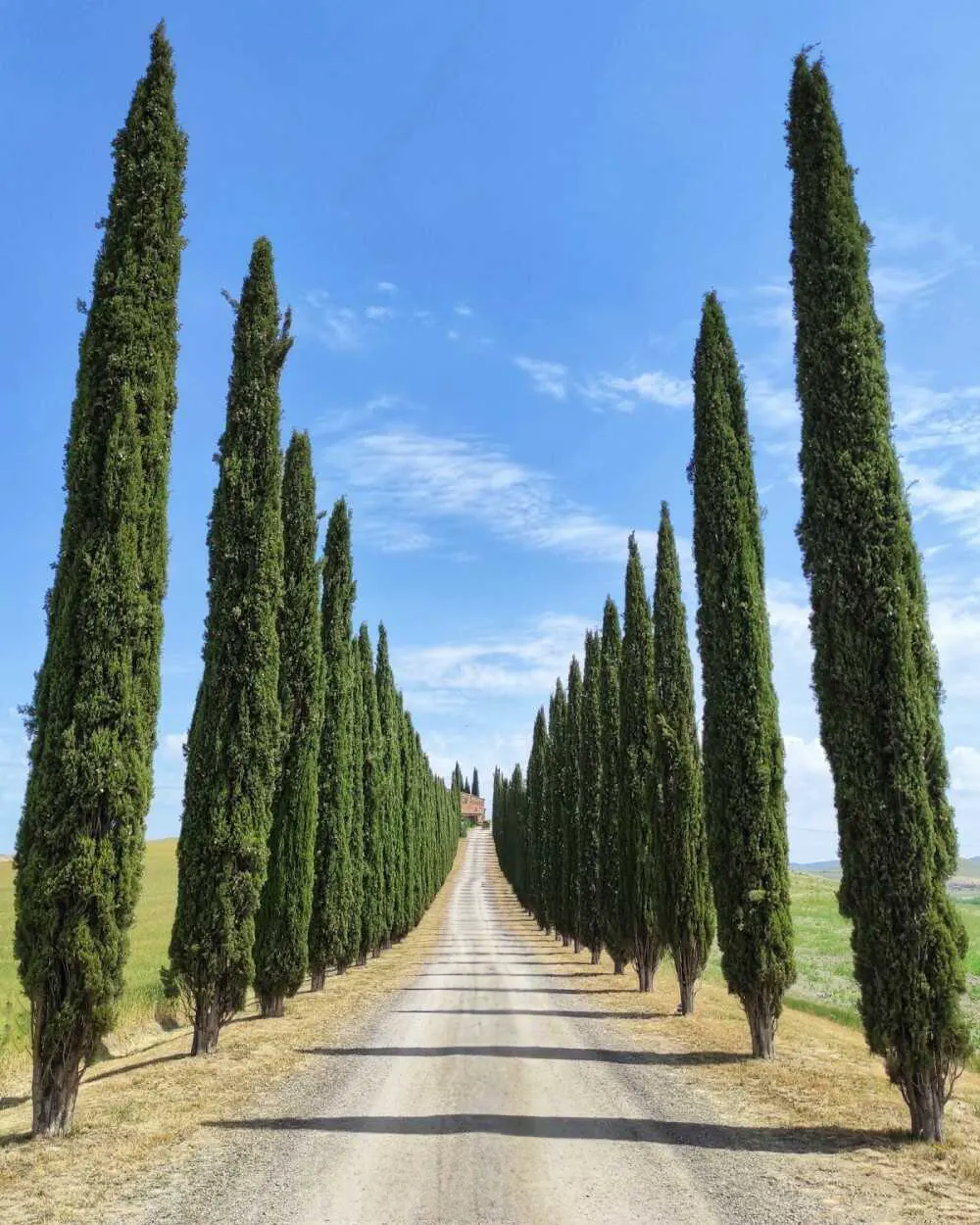
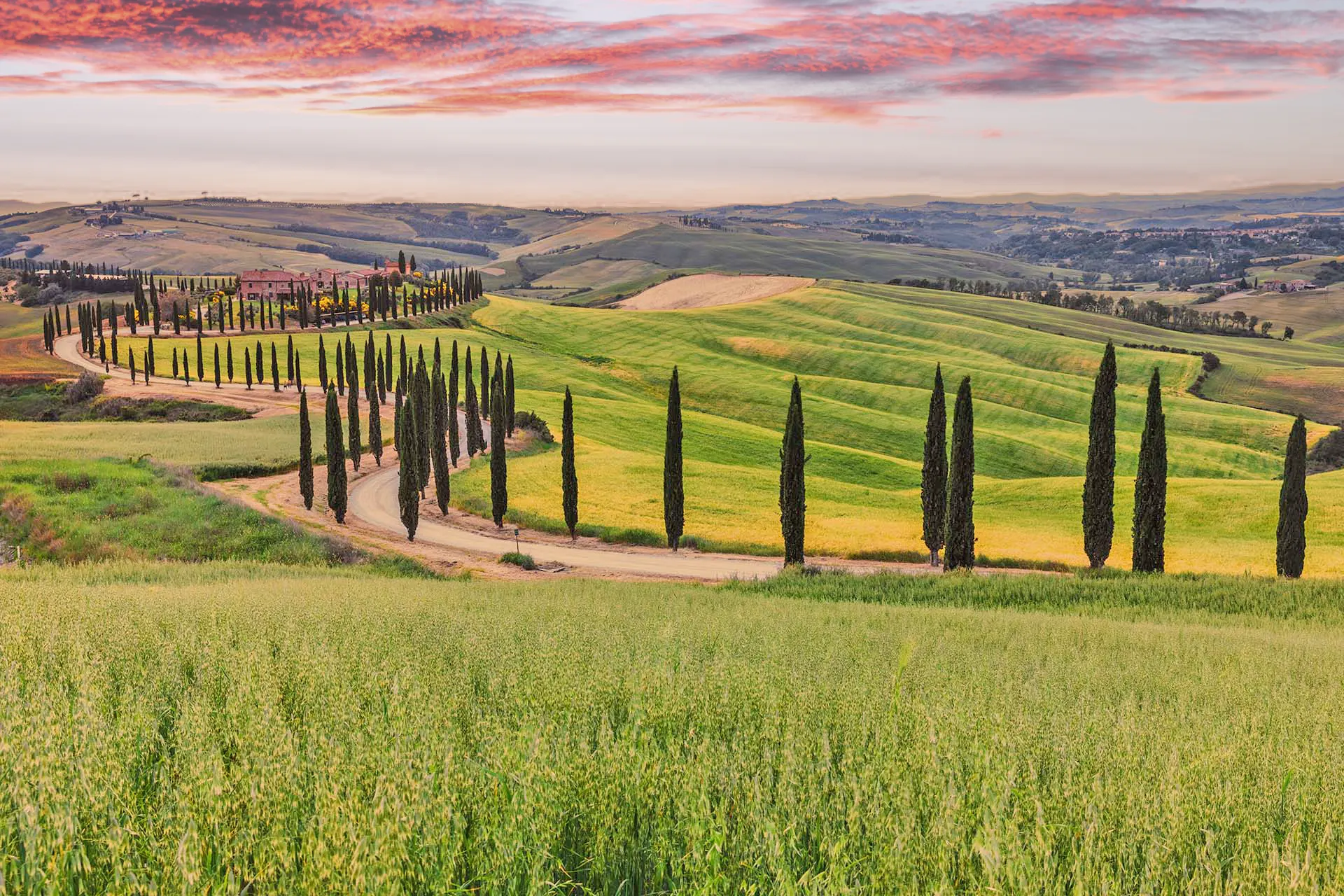
«[...] The foreigner from the North envies us for this tree (where it does not grow due to fog and cold), but even people from other countries admire the way in which we use it; whether they have seen it located between the house and the haystack, or at the edge of the property, or along the driveway of one of the many Tuscan villas; a method and arrangement that give our landscape an unforgettable appearance.
If one were to claim that one could enunciate an exact rule on the proper use of the cypress, one would be mistaken: however, in gardens it should be used as a vertical element on the horizontal lines of the terrain. It is the climate, the location, the exposure, and the tradition that should guide the spirit of those who, with the soul of an artist, wish to place the cypress in its true landscape value. [...] »
Pietro Porcinai
The Cypress and Celtic Culture
The Cypress is also one of the central trees in Celtic culture. In the horoscope of this ancient tradition, those born between January 25th and February 3rd and between July 26th and August 4th belong to this sign. According to Celtic astrology, the Cypress, with its everlasting greenery, is a symbol of longevity. Those born under this sign age gracefully, without excessive torment. The Cypress is tolerant by nature, often neglecting its own affairs and dedicating itself altruistically to those of others, sometimes even neglecting its own health. Frank and rustic, the Cypress seems to be able to communicate with both humans and the main forces of nature, instinctively understanding the wind, the signs of the waters, and the clues of the earth. The Cypress truly values friendship and possesses a deep appreciation for good humor and good company. The pleasure of its presence therefore makes it indispensable in society. Even the most "grumpy" Cypresses know how to make themselves loved. In adolescence, they often try to fly on their own two feet, seeking true independence.
Saverio Pepe

